In 255 BC, during the First Punic War, the Roman Republic attempted to evacuate remnants of its defeated expeditionary force from Carthaginian Africa. A large fleet commanded by Servius Fulvius Paetinus Nobilior and Marcus Aemilius Paullus successfully evacuated survivors after defeating an intercepting Carthaginian fleet, but was struck by a storm while returning, losing most of its ships.
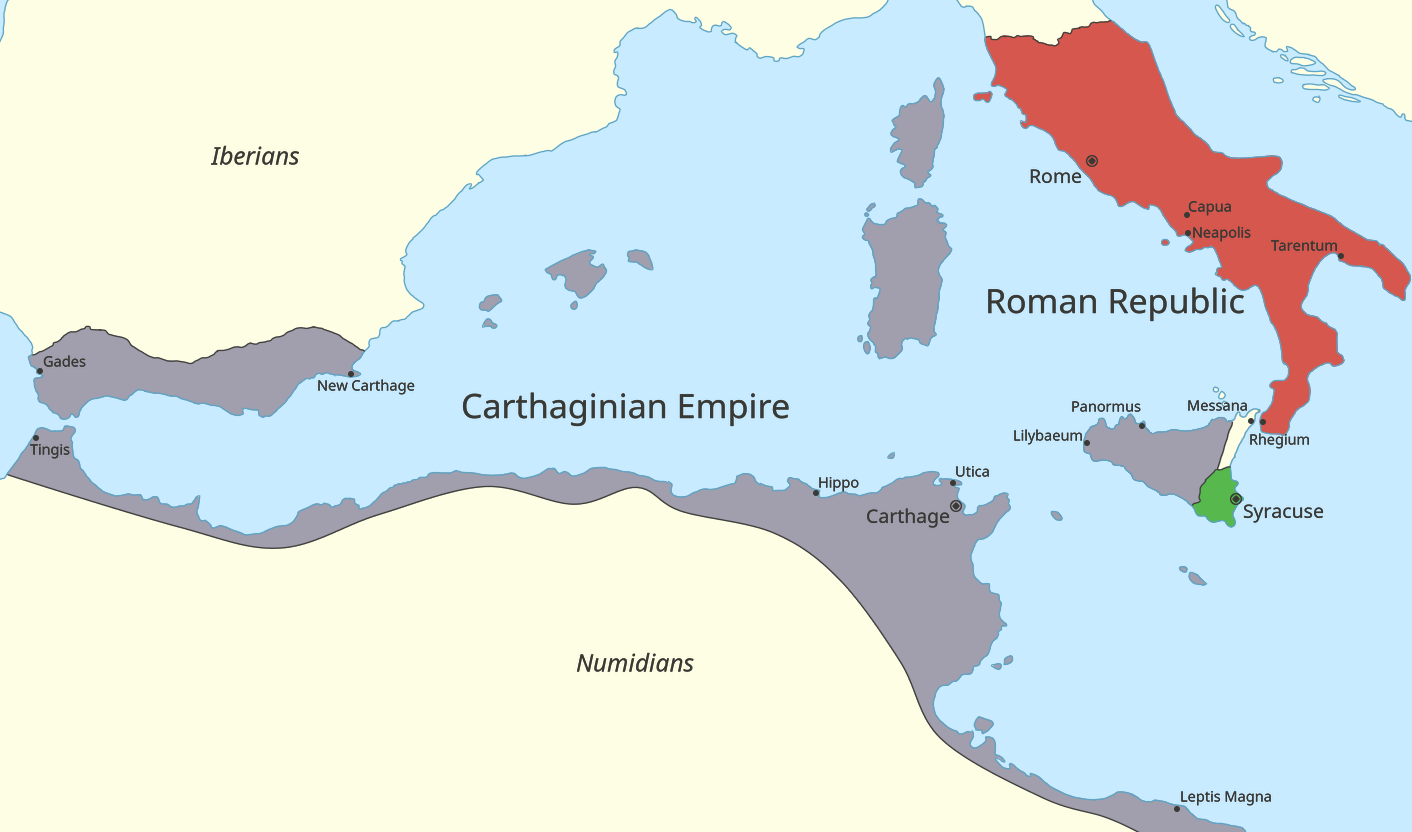
The Romans had invaded the Carthaginian homeland (in what is now northeastern Tunisia) in 256 BC. After initial successes, they had left a force of 15,500 men to hold their lodgement over the winter. This force was decisively beaten at the Battle of Tunis in the spring of 255 BC and its commander, Marcus Atilius Regulus, captured. Two thousand survivors were besieged in the port of Aspis. The Roman fleet of 390 warships was sent to rescue and evacuate them. A Carthaginian fleet of 200 ships intercepted them off Cape Hermaeum (the modern Cape Bon or Ras ed-Dar), north of Aspis. The Carthaginians were defeated with 114 of their ships captured, together with their crews, and 16 sunk. Roman losses are unknown; most modern historians assume there were none.
The Romans landed in Aspis, sortied, dispersed the besiegers and raided the surrounding country for food. All then re-embarked and left for Italy. Off the south-east corner of Sicily, a sudden summer storm blew up and devastated the Roman fleet. From their total of 464 warships, 384 were sunk, as were 300 transports; and more than 100,000 men were lost. Despite the heavy losses of both sides, the war continued for a further 14 years, mostly on Sicily or the nearby waters, before ending with a Roman victory.
Comentários
Enviar um comentário